


‘The Pancreas”
November 21, 2019“The Pancreas”…..
Did you know November is Pancreatic Cancer awareness month?
The Cancer Council of Australia states that Pancreatic Cancer is the 5th most common cancer, with an incidence of 1 in 54 for men and 1 in 70 for women.
Unfortunately, the 5 year survival rate is on 8.7%.
(https://www.cancer.org.au/about-cancer/types-of-cancer/pancreatic-cancer.html)
Currently there is no specific screening test for Pancreatic Cancer, which results in late detection of the cancer and thus a poor outcome.
There are commonly 2 types of pancreatic carcinoma’s:
- Pancreatic Exocrine Carcinoma’s (93% of Pancreatic Carcinomas).
- Adenocarcinoma being the most common (It develops in the cells lining the pancreatic duct), and most commonly identified in the head of the pancreas.
- Pancreatic Neuroendocrine Carcinoma’s (7% of Pancreatic Carcinomas). These develop from abnormal growth of islet cells within the pancreas. (https://www.pancan.org/facing-pancreatic-cancer/about-pancreatic-cancer/types-of-pancreatic-cancer/)
Symptoms that can be associated with Pancreatic Cancer include:
- Upper abdominal pain
- Loss of appetite/weight loss
- Altered bowel habits
- Jaundice
- Diabetes
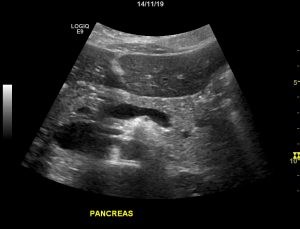
Ultrasound is a fantastic tool for imaging the Pancreas, in a patient that has been correctly prepped.
- Fasted for 6-8 hours (No eating, chewing or smoking).
- Utilise a curved ultrasound probe ideally 2-10 Mhz.
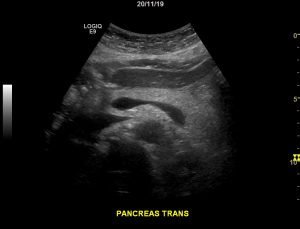
Techniques to optimise visualisation include:
- Deep inspiration/expiration.
- Distention of the abdomen (Valsalva).
- Give the patient 2 glasses of water (The water acts as a window).
- Examine the pancreas in the erect position.

Written by Gail Crawford (Tutor Sonographer/Director IUE).