COVID 19 – What should we expect if we contract the virus?


COVID 19 – What should we expect if we contract the virus?

My take on this question to date is expect the unexpected!!!

Written by Gail Crawford (Director and Tutor Sonographer – Integrated Ultrasound Education)


As like many of you, I have been trying to keep abreast of the signs and symptoms of COVID 19 or the “corona virus”.  To date those predominantly advertised and marketed to the world by the World Health Organisation (WHO), and leaders in the medical field are:

  • “Fever, dry cough, and tiredness”

Serious symptoms include:

  • Difficulty breathing/shortness of breath, Chest pain, and/or loss of speech/movement.

With a lesser emphasis on:

  • Nasal Congestion, headache, conjunctivitis, sore throat, diarrhea, loss of taste or smell and skin rash/discoloration.

They are stating that 80% of people will recover from the virus without hospital treatment and that predominantly the elderly and people with underlying medical conditions such as heart and lung problems, diabetes, high blood pressure and cancer are the people at most risk of serious complications.

A friend of mine, a health worker who would like to remain anonymous was recently diagnosed with Covid 19.  For the purpose of this blog post we will call her “Anne”.

From contact tracing it appears Anne acquired the virus at work.  But not necessarily from direct contact with a person/patient. It is assumed that she may have contracted it from a hard surface item such as paper, pen, desk etc (We now know that the virus can remain active of hard surfaces for up to 72 hours and porous surfaces such as paper for up to 24 hours) (Neeltje van Doremalen, et al – Aerosol and Surface Stability of SARS-CoV-2 as Compared with SARS-CoV-1).

I thought this would be a prime opportunity to ask a little more about her own personal experiences of the virus, and her fellow colleagues.  Their symptoms and how they have felt both mentally and physically.

This is an outline of Anne’s Journey……

Anne had been working long hours up to her initial diagnosis.  She is generally well, with mild asthma and has been post-menopausal for 3 years.

Day 1. – symptoms began to appear, so presumably contagious prior to this – “Sneezing” with normal temperature (36.5 degrees).

Day 2 – Sore throat, “Runny nose” and normal temperature (37.2 degrees).  Normal temperature can range from 36.1 degrees up to 37.2 degrees.

Day 3 – Sore throat, “Runny nose”, cough, fatigue and only “Very mild temperature (37.5 degrees) – Low grade fever”. 

It was at this stage that a test for Covid 19 was arranged.

Day 4 – Sore throat, “Runny nose”, “severe fatigue/lethargy”, diarrhoea, cough and only “Very mild temperature”.

Day 5 – Cough, extreme headache, diarrhoea, sore throat has eased, “Normal temperature” and “severe lethargy”.  Results are POSITIVE FOR COVID 19.


That evening was REALLY DIFFICULT, Anne experienced shortness of breath and an unfounded “Anxiety”.   She also said that many of her colleagues experience this atypical anxiousness.  Enough to prevent her from wanting to fall asleep.  We can already appreciate that the Covid 19 pandemic is posing a significant physiological threat, and has altered everyone’s daily lives significantly, however there is research now stating that we need to also review the  “neuropsychiatric symptoms” caused by the disease, such as seizures, confusion and general “haziness”.

Day 5 – Her colleague also tested positive, but through this entire ordeal has only experienced mild hot flushes (Raised temperature).  NO other symptoms.

Day 6, 7 & 8 – “Runny nose”, “Normal temperature”, Cough, diarrhoea, headache, “sever lethargy” and loss of taste and smell (anosmia).

Anne said that many of her colleagues had sever sinus pain early on and had lost their taste and smell.  However, it was not till day 6 that it occurred for her.  It appears for these colleagues it is taking a long period of time for them to regain their taste and smell (> 5 weeks).

During this entire time, she has been home quarantined, visited by a variety of emergency services including Fire brigade, Police, SES, Defence force to ensure she is abiding by quarantine laws.  She has also been in regular contact with her assigned medical practitioner, who has been exceptional.  Providing medical support in a physical and mental capacity. This has really helped in her “fight” against this virus.

Day 9 – Another day from “Hell” – Cough now productive, taste improved, diarrhoea stopped (Via medication), “Crazy heavy post-menopausal bleed” and ongoing lethargy.  What has caused this bleed?   This is a very atypical symptom seen in the literature; however, it appears that some of Anne’s colleagues have also experience similar symptoms.  This bleed went on for 6 days.

The literature demonstrates a link between estrogen (Female hormones) and the virus, stating that estrogen could/can help in the fight against the virus and boost immunity.  Thus potentially those with decreased estrogen levels could potentially be at greater risk of more sever Covid 19 symptoms (Such as Anne being menopausal).  Interestingly one of the many trials being set up to minimise symptoms of the  virus is whether female hormones, HRT or the pill could assist in the “fight”, especially for men.

So what caused Anne’s bleed?

There is developing literature outlining blood clothing disorders occurring in Covid positive patients, this is being supported by autopsies on these patients. It is being demonstrated that the Covid 19 virus may cause “atypical blood clotting”, which can result in “COVID Toes” linked to lower limb blood clots, pulmonary embolism and clots leading to stokes.

But on writing this blog post I can not located any up to date research papers on “Covid positive patients and post-menopausal bleeding PMP”, maybe it is a result of the virus causing an inflammatory response with the endometrium (Endometrial atrophy).   Either way this needs to be investigated to exclude any other underlying causes.

“My take home message in regards to this symptom  is that we may potentially see more patients over the coming months and years who may have been infected with the virus, presenting for pelvic ultrasound looking for causes of PMP bleeding”.

Day 10 – Productive cough, taste completely returned, “ongoing bleeding”, ongoing lethargy.

Day 11 – Now treated with Antibiotics for productive cough (preventing any change of pneumonia), ongoing lethargy.

Let’s fast forward to;

Day 29 – “Ongoing severe lethargy”, “cough eased, but still transient”.  Chest cleared.

Now a COVID 19 Survivor testing negative to the virus!!!!

So from all of this what are my takings?

What is my advise…..?

Until a vaccine is developed it is a real possibility that at some stage, we will all get the virus.    There is a large and varied range of symptoms, not just the “Typical” symptoms that have been documented to date in the literature.  Please be vigalent and  “Expect the Unexpected”.

Please feel free to contact me with any feedback or suggestions:

Email: (gail@iuc.consulting)


References:

Clean, Clean, Clean – Minimise Risk, Minimise Exposure!


Clean, Clean, Clean – Minimise Risk, Minimise Exposure!

Clean, Clean, Clean – Minimise Risk, Minimise Exposure, “Social Distance”…. this is all I have heard for the past two weeks.  But still as Sonographers we can’t “Socially Distance”.

Everyone is implementing strict guidelines in the Health Profession as to who can be seen/assessed and who should be rebooked at a later date following a quarantine period. Private practices that I am involved with now only allow the patient in the room, unless a carer or guardian is required (limiting any unnecessary exposure from a third person).  This includes obstetric patients, so sadly no partners are allowed.  Facetime is being implemented at some locations for partner interaction😊

Sonographers in the hospital settings are being regularly updated with strict protocols around dealing with COVID-19 positive or suspected positive patients.  Appropriate PPE is being provided, along with detailed cleaning instructions, scan times etc.

But what I wanted to focus on was looking after ourselves “The Sonographer” and those other health practitioners that are in close contact with a patient for extended periods of time, in the LOW risk setting (i.e. no current indication of COVID-19 exposure).

Patients will continue needing our essential ultrasound services.  Pregnant women will need their routine screening, we will be needed to exclude ectopic pregnancies, DVTs and appendicitis.  Acute Cholecystitis cases will still need our attention.  We might see a drop in Musculoskeletal as sporting activities are limited, but may in time to come, need to perform chest Ultrasounds for suspected pneumonia.

How can we minimise our risk and exposure?  This is a fast-moving entity.  Some key learnings that have been consolidated are:

COVID 19 (Officially – SARS-CoV-2)

·        Can be airborne for up to 3 hours.

·        Can remain active on hard/shiny surfaces for up to 72 hours

·        Can remain traceable on porous surfaces(Cardboard/Paper/Fabrics) for up to 24 hours

Work Attire:

  • If you don’t have scrubs, or a uniform. Consider some easy-care cotton clothing (used solely for work).
  • Ensure sleeves are short (to ensure optimal hand washing techniques).
  • Remove uniform at work, bag and bring home (could bag in pillowcase). Everything into the wash immediately.  Hot wash with detergent is recommended.
  • Shoes (closed in specific for work). Leave at the clinic/or at the front door before entering the home, reducing the risk of the virus entering the home.

Hand Cleanliness:

  • We are all aware that hand cleanliness is essential; it goes without saying…. Gloves at all times. Ensure hand washing techniques with soap and water  are up to date/hand sanitiser is utilised appropriately.

Ultrasound room:

  • Remove all unnecessary items from the room.
  • No bed linen to be used, with beds to be cleaned after every patient.
  • Ultrasound Machine and probes to be cleaned after every patient.
  • Clean the door handles and desk/ keyboard regularly through the day.

Please review the cleaning products you are using:

Word of Warning………

  • Ensure cleaning products kill viruses not just “Bacteria”.
  • Refer to your specific Ultrasound vendor in relation to probe cleaning (As probes can be sensitive to some cleaning products). All vendors have released appropriate cleaning products to combat COVID-19.

US Environmental Protection agent list of disinfectants for use against SARS-CoV-2, can be found at his website:

https://www.epa.gov/pesticide-registration/list-n-disinfectants-use-against-sars-cov-2

Face Masks (Appropriate PPE):

As sonographers we can’t socially distance. I know a lot of sonographers in LOW risk clinics are concerned about PPE, especially face masks.

We are all aware that correct specification face masks are in short supply – N2/N95 masks (95% effective). – PLEASE ensure that if using these, please use correctly and maintain a full seal.

Guidelines: https://www.health.qld.gov.au/clinical-practice/guidelines-procedures/diseases-infection/infection-prevention/transmission-precautions/p2n95-mask

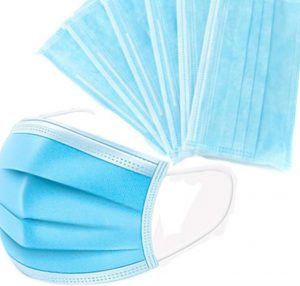
Dr Jill Lee Cheng Sim (Singapore), also suggested as a barrier “3 ply masks”, for low risk personal (these don’t have a complete seal and thus tiny particles can get through).  But it is a good baseline.

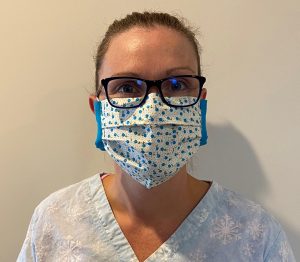
Alternatively, due to short supply I have been researching “cloth masks”.  My mother has kindly made a prototype and currently making more for my Sonographer friends and colleagues.  There is very limited research on the topic and with such a fast paced virus pandemic, not a great deal of time to trial.  From a research paper in 2013 Davies et al conclusion was  “Our findings suggest that a homemade mask should only be considered as a last resort to prevent droplet transmission from infected individuals, but it would be better than no protection”. https://www.ncbi.nlm.nih.gov/pubmed/24229526.

“In a low risk setting I think this is definitely feasible”

Lunch/Tea Room:

  • Avoid sharing cups/ mugs in the tearoom. Take your own keep cup if you use the staff room and avoid the communal tea towels etc.  Always maintain personal hygiene etiquette (Social Distancing). As this is how health care workers in Wuhan enabled the disease unknowingly.
  • Also pay attention to frequently used areas such as toilets/bathrooms, light switches/door handles. Use appropriate hand washing/hand sanitising techniques.

Minimise examination time:

  • Scans should be performed efficiently to reduce patient contact time (but by no means does this mean reducing the quality of the examination). This means if a bladder is 3/4 full for a renal, scan them as they present. If the scan requires further prep to be diagnostic, rebook them. Do not leave patients in the room or department to fill. For obstetrics scans, send the patient offsite for a walk and then rescan.

Mental Health:

  • While the entire world is grappling to contain the coronavirus, there is a huge emotional and physiological side to this virus. Please everyone be mindful of your mental health.  Continue talking to your peers about your concerns.  Let’s work at a team to get through this together.  Keep up your physical health (exercise is a fantastic stress release), take up a hobby, stay connected with friends and family and remember this is only temporary.  We CAN and WILL get through this.

We all need to stick together at these tough times.  Stay safe.

Please feel free to touch base with questions/discussion or if you would like a homemade mask (Just as a low risk temporary measure)😊

Gail

Director/Tutor Sonographer/Sonographer

Integrated Ultrasound Education

gail@iuc.consulting.com.au


Other articles which may be of interest:


References:

  1. Davies A, Thompson KA, Giri K, Kafatos G, Walker J, BennettA.   Testing the efficacy of homemade masks: would they protect in an influenza pandemic? Disaster Med Public Health Prep.2013 Aug;7(4):413-8. doi: 10.1017/dmp.2013.43.
  2. Neeltje van Doremalen, Trenton Bushmaker, Dylan H. Morris, Myndi G. Holbrook, Amandine Gamble, Brandi N. Williamson, Azaibi Tamin, Jennifer L. Harcourt, Natalie J. Thornburg, Susan I. Gerber, James O. Lloyd-Smith, Emmie de Wit, Vincent J. Munster. Aerosol and Surface Stability of SARS-CoV -2 as Comparted with SARS-CoV-1.  New England Journal of Medicine, 2020; DOI: 1056/NEJMc2004973
  3. National Institute of Allergy and Infectious Diseases’ Laboratory of Virology in the Division of Intramural Research in Hamilton, New England Journal of Medicine, 2020
  4. https://www.huffingtonpost.com.au/entry/how-long-coronavirus-live-clothing-washing_l_5e724927c5b6eab779409e74
  5. https://ww2.health.wa.gov.au/~/media/Files/Corporate/general%20documents/Infectious%20diseases/PDF/Coronavirus/COVID19-Environmental-Cleaning-for-workplaces.pdf
  6. https://www.epa.gov/pesticide-registration/list-n-disinfectants-use-against-sars-cov-2
  7. https://www.health.qld.gov.au/clinical-practice/guidelines-procedures/diseases-infection/infection-prevention/transmission-precautions/p2n95-mask


COVID-19 – “The Sonographers Dilemma”


COVID-19 – “The Sonographers Dilemma”

This is a personal account of my feelings, thoughts and learnings as a Sonographer/Tutor Sonographer in a Private Practice setting in Australia!

Are your anxiety levels running high?  Mine are!

I’m worried about my elderly Grandparents (90 and 92), my parents, and all of those friends and family in the community who have weaker immunity.

How is this Corona Virus Pandemic going to play out in your region?

How do we as Sonographers help contain the spread, and keep ourselves safe when we are UNABLE to  maintain “Social distancing”.  As Sonographers our patients are close, and we are often in the room with them for 20-30 minutes at a time.

Currently in Australia where I am based, confirmed numbers are relatively low.  But anxiety levels are excessive.  My question especially as a Sonographer in a Private Practice setting, is how do we keep ourselves safe/limit our exposure, to the active virus?  How do we ensure that we don’t contribute to the spread? To our patients and our loved ones?

Currently we are following the Australian Government Department of Health Guidelines (https://www.health.gov.au/)

  • People who have been overseas in the past 14 days are required to self-isolate and will not be examined (can postpone appointment)
  • People who have come into contact with a confirmed case of COVID-19 are also required to self-isolate for 14 days and will not be examined (can postpone appointment)
  • People who have a fever are also asked to re-schedule their appointment.

But what about those people who may have contracted the virus via community transmission (unknowingly) and are asymptomatic.  These are the people we sonographers my encounter.

I watched the ISUOG webinar on the 17/03/2020  and want to share “ my personal key learnings” from the speakers.  The entire webinar can be found at:

Prof Francesco Castelli (Italy), accentuated how quickly the virus spreads, and that it is highly infectious amongst health workers.   He also said that often first testing of the virus can provide a False negative reading…. So be cautious.  If clinical symptoms fit, then treat as COVID-19 as precaution.  He also said that once testing positive, it may take up to 3 weeks for a patient to be non-infectious (not be contagious).

Dr Jill Lee Cheng Sim (Singapore), discuss how the Singaporean health care system had learnt from the SARS outbreak in 2009, where 25% of health care workers were infected.  To date on 1% of health care workers have been infected with the COVID-19 virus.

This is attributed to:

  • Protective equipment and good infection control training.
  • General preventative measures and PPE use.

Also remember to support colleagues, be aware of Mental and social health.

Prof Liona Poon (HK) stated that they wear a mask at all times whilst at work and that even at lunch personal hygiene etiquette (Social Distancing) should be maintained.  This is how health care workers in Wuhan enabled the disease unknowingly.  The appropriate masks have been stated as N2/N95.  That staff in Hong Kong also change their clothes and shower prior to coming home.  Preventing any spread via clothing.

A guide to the correct use of the N2/N95 mask can be found at this site:

https://www.health.qld.gov.au/clinical-practice/guidelines-procedures/diseases-infection/infection-prevention/transmission-precautions/p2n95-mask

I have started implementing my learnings from Tuesdays nights Webinar immediately.  Here is a photo of me with my new fashion accessory  “N2 mask” (Getting use to the feeling on my face)….. trying not to hyperventilate😊

I am continuing with all my usual behaviours also.  Gloving for all patients, cleaning the room and probes thoroughly between patients.

Changed my clothes prior to leaving work and showered as soon as I got home!

We all need to stick together at these tough times.  Stay safe.

Please feel free to touch base with questions/discussion😊

Gail

Director/Tutor Sonographer/Sonographer (Integrated Ultrasound Education)

Email: gail@iuc.consulting.com.au